
Black Box Warnings Every PMHNP Must Memorize
High-yield psych black box warnings for the PMHNP exam: antidepressant suicidality, antipsychotic dementia mortality, and clozapine risks.
The black box warnings the PMHNP exam tests most are antidepressant-associated suicidality in patients under 25, increased mortality when antipsychotics are used in elderly patients with dementia-related psychosis, and clozapine's multiple boxed warnings led by agranulocytosis and myocarditis. A boxed warning is the FDA's strongest safety alert, and recognizing the right one in a vignette is reliably worth points.
This high-yield review walks through the boxed warnings every PMHNP must memorize, organized by drug class.
What a Black Box Warning Is
A boxed (black box) warning is the most serious warning the FDA requires, signaling risks that may be life-threatening or cause serious injury. It does not forbid use — it demands informed prescribing, monitoring, and patient education. On the exam, the presence of a boxed warning often dictates the right counseling point or monitoring step.
Antidepressants: Suicidality in Youth and Young Adults
All antidepressants — SSRIs, SNRIs, TCAs, atypicals, and MAOIs — carry a boxed warning for increased risk of suicidal thinking and behavior in children, adolescents, and young adults up to age 24.
- The risk is highest early in treatment and after dose changes.
- Monitoring: assess closely for worsening depression, suicidality, and unusual behavior, especially in the first few weeks and after any dose adjustment. Early, frequent follow-up is the testable intervention.
- The warning does not apply as an increased risk in adults over 24, where antidepressants reduce suicidality overall.
- Counsel families to watch for agitation, irritability, and emerging suicidal thoughts.
The ADHD non-stimulants atomoxetine and viloxazine share an analogous suicidality boxed warning in pediatric patients. See our ADHD medications review and SSRI exam review for more.
Antipsychotics: Increased Mortality in Elderly Dementia Patients
Both first- and second-generation antipsychotics carry a boxed warning for increased mortality when used to treat dementia-related psychosis in elderly patients. Deaths are largely cardiovascular (for example, sudden death) or infectious (such as pneumonia).
- Antipsychotics are not approved for dementia-related psychosis.
- When behavioral symptoms of dementia are described, favor non-pharmacologic interventions first; reserve antipsychotics for severe agitation or danger, at the lowest effective dose and shortest duration, with documented risk-benefit discussion.
- This is one of the most frequently tested geriatric safety points. For the wider side-effect picture, see our antipsychotic side effects review.
Clozapine: The Most Heavily Boxed Antipsychotic
Clozapine is uniquely effective for treatment-resistant schizophrenia and for reducing suicidality in schizophrenia, but it carries several boxed warnings — a frequent exam target.
- Severe neutropenia / agranulocytosis — the classic warning. It requires absolute neutrophil count (ANC) monitoring, frequent at first and continuing throughout treatment. Patients are enrolled in a national risk-management program, and the drug is held or stopped based on ANC thresholds.
- Myocarditis and cardiomyopathy — watch for chest pain, dyspnea, tachycardia, fever, and signs of heart failure, especially in the first weeks.
- Seizures — dose-related; clozapine lowers the seizure threshold.
- Orthostatic hypotension, bradycardia, and syncope — significant during titration, which is why dosing is started low and increased slowly.
- It also shares the elderly dementia mortality boxed warning common to all antipsychotics.
Board pearl: a patient on clozapine with new fever, chest pain, and shortness of breath should raise concern for myocarditis; a falling ANC raises concern for agranulocytosis. Both demand urgent action.
Stimulants: Abuse, Dependence, and Cardiac Risk
Stimulants used for ADHD (methylphenidate and amphetamine classes) carry a boxed warning regarding high potential for abuse and dependence, reflecting their Schedule II status, plus warnings about serious cardiovascular events and sudden death in patients with underlying structural cardiac abnormalities. Screen the cardiac history and counsel on diversion risk.
Mood Stabilizers and Anticonvulsants
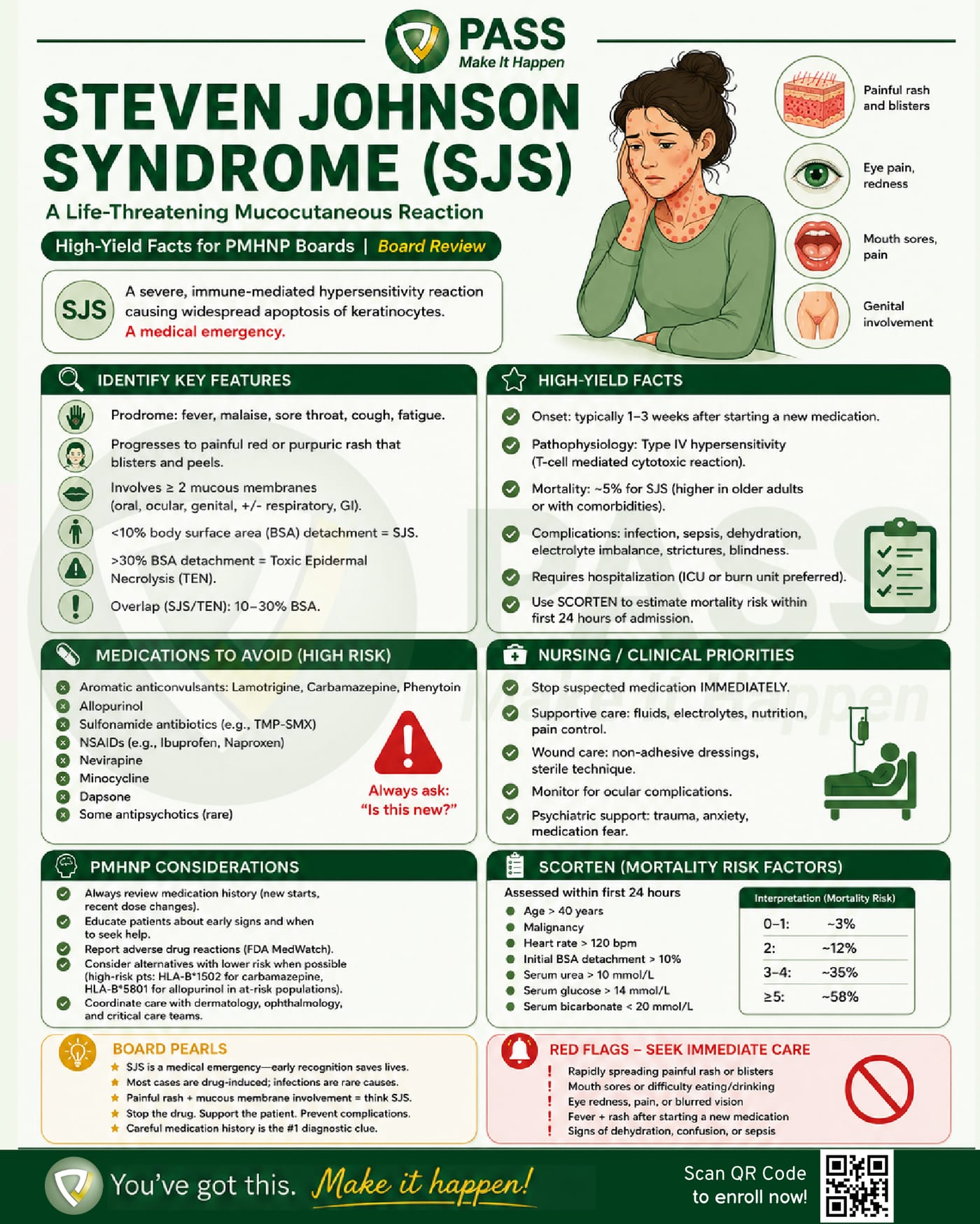
Several agents commonly used in psychiatry carry important boxed warnings.
- Valproate (divalproex): boxed warnings for hepatotoxicity, pancreatitis, and teratogenicity (neural tube defects and reduced IQ). It is generally avoided in people who can become pregnant when alternatives exist.
- Carbamazepine: boxed warnings for serious dermatologic reactions (Stevens-Johnson syndrome / toxic epidermal necrolysis), with screening for the HLA-B*1502 allele in at-risk ancestries, and for aplastic anemia and agranulocytosis.
- Lamotrigine: boxed warning for serious, potentially life-threatening rashes, including Stevens-Johnson syndrome — the reason for its slow, mandatory titration. For mood-stabilizer monitoring overall, see our lithium monitoring review.
Other High-Yield Boxed Warnings
- Bupropion and varenicline historically carried neuropsychiatric warnings; bupropion shares the antidepressant suicidality warning, and it lowers the seizure threshold (contraindicated in seizure disorders and eating disorders).
- Benzodiazepines and opioids: a boxed warning highlights the danger of concomitant use, which causes profound sedation, respiratory depression, coma, and death. See our benzodiazepine protocols and MAT review.
- Tricyclic antidepressants carry the antidepressant suicidality warning and are notably lethal in overdose (cardiac conduction effects).
Reminder: This article is for board preparation only. Always confirm current boxed warnings, monitoring intervals, and contraindications against the latest FDA prescribing information before making clinical decisions.
How to Memorize Them for the Exam
Group the warnings by trigger words in the stem:
- Young patient + new antidepressant to monitor closely for suicidality.
- Elderly + dementia + antipsychotic to increase mortality, prefer non-pharmacologic care.
- Treatment-resistant schizophrenia + lab monitoring to clozapine and ANC, plus myocarditis and seizures.
- Pregnancy + mood stabilizer to valproate teratogenicity.
- New rash + lamotrigine or carbamazepine to Stevens-Johnson syndrome.
- Benzodiazepine + opioid together to respiratory depression and death.
Reinforce these with our high-yield psychopharmacology review and the full PMHNP-BC exam guide.
Want to see these warnings in realistic question form? Take a free diagnostic assessment to find gaps, then drill verified PMHNP items at PASSNP. Create your free account and start studying smarter today.
Frequently asked questions
What is a black box warning?
A black box (boxed) warning is the strongest safety warning the FDA can require for a medication, alerting prescribers to serious or life-threatening risks. It does not prohibit use but mandates careful prescribing, monitoring, and patient counseling.
Which patients are covered by the antidepressant suicidality warning?
All antidepressants carry a boxed warning for increased suicidal thinking and behavior in children, adolescents, and young adults up to age 24. Risk is highest early in treatment and after dose changes, so close monitoring in the first weeks is essential. The increased risk does not apply to adults over 24.
Why do antipsychotics carry a warning for elderly dementia patients?
First- and second-generation antipsychotics increase mortality, mostly from cardiovascular events and infections, when used for dementia-related psychosis in elderly patients. They are not approved for this use, so non-pharmacologic measures are preferred and antipsychotics are reserved for severe cases at the lowest dose for the shortest time.
What boxed warnings does clozapine carry?
Clozapine carries boxed warnings for severe neutropenia/agranulocytosis (requiring ANC monitoring), myocarditis and cardiomyopathy, seizures, and orthostatic hypotension/bradycardia/syncope, plus the shared antipsychotic warning for increased mortality in elderly dementia patients.
Which mood stabilizers have notable black box warnings?
Valproate has boxed warnings for hepatotoxicity, pancreatitis, and teratogenicity. Carbamazepine has warnings for serious skin reactions (with HLA-B*1502 screening) and for aplastic anemia and agranulocytosis. Lamotrigine has a warning for serious, potentially life-threatening rashes, which is why it requires slow titration.
Related articles
Both PMHNP board blueprints broken down by domain and question count, plus the daily study system and high-yield content matrix that turn those weights into a study plan.
Since 2024, psychiatric NPs can certify through two boards: the long-standing ANCC PMHNP-BC or the newer AANPCB PMHNP-C. Here's how the two exams compare and how to choose.
PMHNP board review of perinatal mood disorders: baby blues vs postpartum depression vs psychosis, EPDS screening, SSRIs in pregnancy, and brexanolone.
Ready to practice what you just read?
Practice questions with full rationales. Sample your specialty free.
No credit card required · No subscription, no auto-renew