
SSRIs for the PMHNP Exam: MOA, Side Effects & High-Yield Pearls
SSRIs for the PMHNP exam: mechanism of action, common and serious side effects, discontinuation syndrome, the pediatric black box, and patient education pearls.
SSRIs are first-line for depression and most anxiety disorders, and they are the most heavily tested drug class on the PMHNP-BC exam. Their mechanism is simple — they block the serotonin reuptake transporter to increase synaptic serotonin — but the board points live in the side-effect profile: hyponatremia, bleeding risk, sexual dysfunction, discontinuation syndrome, and the pediatric suicidality black box warning.
This review covers the SSRIs you must know, their shared and individual quirks, the serious adverse effects, and the patient education that shows up in vignettes. Clinical prescribing still requires current references — this is exam-focused study.
Mechanism of Action
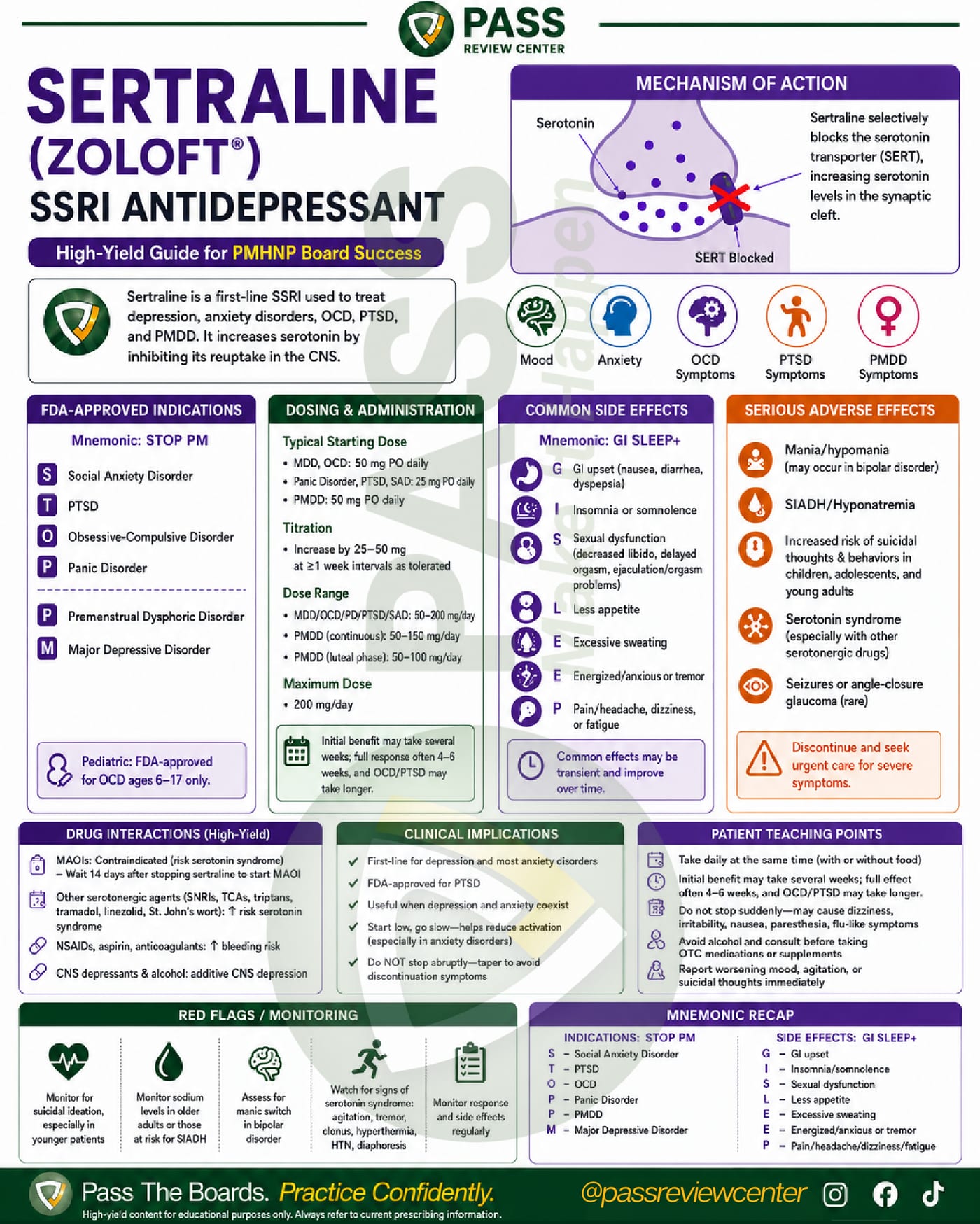
SSRIs selectively inhibit the serotonin reuptake transporter (SERT), increasing serotonin availability in the synaptic cleft. Unlike TCAs, they have minimal affinity for muscarinic, histaminic, or alpha-adrenergic receptors, which is why they are far better tolerated and far safer in overdose.
Key timing pearl: Antidepressant effect takes 4–6 weeks to fully develop, though some symptoms (sleep, appetite) improve sooner. Patients must be told not to expect immediate relief and not to stop early.
The SSRIs to Know
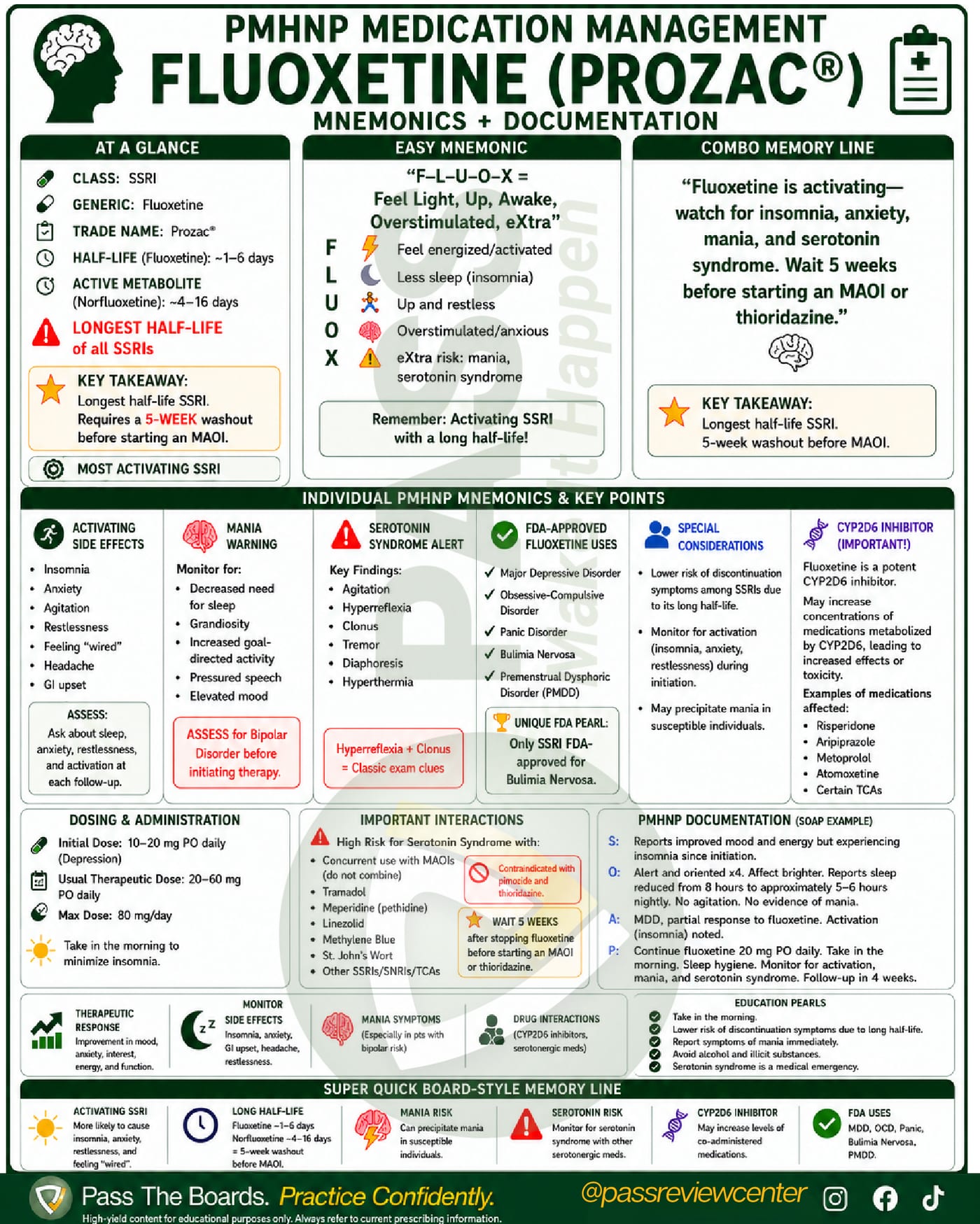
- Fluoxetine (Prozac): Longest half-life (active metabolite norfluoxetine), so it has the lowest discontinuation-syndrome risk and is often used to taper off other SSRIs. Activating — can cause insomnia. Approved in children for depression and OCD.
- Sertraline (Zoloft): Broad indications, generally well tolerated; more GI upset (diarrhea). A common first-line choice.
- Paroxetine (Paxil): Most anticholinergic and sedating, short half-life (the classic culprit for the worst discontinuation syndrome), and avoided in pregnancy (category D — cardiac malformation risk). Most weight gain.
- Citalopram (Celexa): Dose-dependent QT prolongation — max dose is limited (and lower in older adults). Get an ECG with risk factors.
- Escitalopram (Lexapro): The active enantiomer of citalopram; clean profile, fewer drug interactions.
- Fluvoxamine (Luvox): Primarily used for OCD; significant CYP450 interactions.
Common Side Effects
These are usually transient but drive many vignettes:
- GI upset — nausea, diarrhea (most common early, often resolves).
- Sexual dysfunction — decreased libido, delayed orgasm, erectile dysfunction. Often persistent and a top reason for nonadherence. Bupropion has minimal sexual side effects and is a common switch or add-on.
- Sleep changes — insomnia (fluoxetine) or sedation (paroxetine).
- Headache, jitteriness, and increased anxiety in the first 1–2 weeks.
- Weight changes — variable, more with paroxetine.
Serious Adverse Effects (High-Yield)
Hyponatremia (SIADH)
SSRIs can cause syndrome of inappropriate antidiuretic hormone (SIADH), leading to hyponatremia — especially in older adults, women, and patients on diuretics. Watch for confusion, headache, falls, and seizures. Check sodium if symptoms appear.
Increased Bleeding Risk
Serotonin is needed for platelet aggregation, so SSRIs increase bleeding risk — particularly GI bleeding when combined with NSAIDs, aspirin, or anticoagulants. Counsel patients and consider GI protection in high-risk users.
Serotonin Syndrome
Combining SSRIs with other serotonergic drugs (MAOIs, triptans, tramadol, linezolid) can trigger serotonin syndrome — rapid onset, clonus, hyperreflexia, hyperthermia, and autonomic instability. MAOIs require a washout period (2 weeks; 5 weeks for fluoxetine because of its long half-life). See serotonin syndrome vs. NMS.
QT Prolongation
Citalopram (and to a lesser degree escitalopram) prolongs the QT interval dose-dependently — respect dose limits, especially in older adults and those on other QT-prolonging drugs.
Discontinuation Syndrome
Abruptly stopping an SSRI — particularly a short-half-life agent like paroxetine — causes discontinuation syndrome, remembered by FINISH:
- Flu-like symptoms
- Insomnia
- Nausea
- Imbalance (dizziness)
- Sensory disturbances ("brain zaps")
- Hyperarousal (anxiety, irritability)
Pearl: It is not addiction — it reflects abrupt serotonin withdrawal. Prevent it by tapering slowly. Fluoxetine rarely causes it because of its long half-life.
The Pediatric Black Box Warning
All antidepressants, including SSRIs, carry an FDA black box warning for increased risk of suicidal thinking and behavior in children, adolescents, and young adults (up to age 24). This does not mean don't prescribe — it means monitor closely, especially in the first weeks and after dose changes. Review more in psych medication black box warnings.
Patient Education Pearls
- Onset takes 4–6 weeks — keep taking it even if you feel no change yet.
- Do not stop abruptly — taper to avoid discontinuation syndrome.
- Report worsening mood or suicidal thoughts, especially early in treatment.
- Tell your provider about all medications and supplements (bleeding risk, serotonin syndrome, St. John's wort).
- Discuss sexual side effects rather than stopping silently — alternatives exist.
- Avoid alcohol and use NSAIDs cautiously.
How SSRIs Fit the Bigger Picture
SSRIs anchor the antidepressant section of the broader psychopharmacology high-yield cheat sheet. Knowing how they compare to SNRIs, TCAs, bupropion, and mirtazapine — and how their interactions create emergencies — is exactly what the exam tests.
Practice Makes the Difference
SSRI questions reward pattern recognition: spot the hyponatremia, the bleeding interaction, the discontinuation syndrome, the black box. The way to make that automatic is repetition with clinician-verified questions and rationales. Drill the free PMHNP question bank or create a free account to track your antidepressant accuracy and walk into the exam confident.
Frequently asked questions
How long do SSRIs take to work?
The full antidepressant effect typically takes 4 to 6 weeks, although sleep and appetite may improve sooner. Patients should be counseled to continue the medication and not stop early, since premature discontinuation is a common cause of treatment failure.
Which SSRI has the worst discontinuation syndrome?
Paroxetine is the classic culprit — its short half-life and lack of an active metabolite make its discontinuation syndrome the worst of the class. Fluoxetine has the longest half-life and rarely causes discontinuation syndrome, which is why it is sometimes used to help taper patients off other SSRIs. Always taper SSRIs slowly to prevent FINISH symptoms.
What serious electrolyte problem can SSRIs cause?
Hyponatremia from SIADH, especially in older adults, women, and patients on diuretics. Watch for confusion, headache, falls, and seizures, and check a sodium level if these appear. It is one of the most testable serious SSRI adverse effects.
Why do SSRIs increase bleeding risk?
Serotonin contributes to platelet aggregation, so SSRIs impair clotting and raise bleeding risk, especially GI bleeding when combined with NSAIDs, aspirin, or anticoagulants. Counsel patients and consider gastrointestinal protection in high-risk individuals.
What does the SSRI black box warning say?
It warns of an increased risk of suicidal thoughts and behavior in children, adolescents, and young adults up to age 24. It does not prohibit prescribing; it requires close monitoring, particularly during the first weeks of treatment and after any dose change.
Which SSRI should be avoided in pregnancy?
Paroxetine is generally avoided in pregnancy because of an association with fetal cardiac malformations. Medication decisions in pregnancy should always weigh risks and benefits with current guidelines and the prescribing provider.
Related articles
Both PMHNP board blueprints broken down by domain and question count, plus the daily study system and high-yield content matrix that turn those weights into a study plan.
Since 2024, psychiatric NPs can certify through two boards: the long-standing ANCC PMHNP-BC or the newer AANPCB PMHNP-C. Here's how the two exams compare and how to choose.
PMHNP board review of perinatal mood disorders: baby blues vs postpartum depression vs psychosis, EPDS screening, SSRIs in pregnancy, and brexanolone.
Ready to practice what you just read?
Practice questions with full rationales. Sample your specialty free.
No credit card required · No subscription, no auto-renew