
PMHNP Psychopharmacology Cheat Sheet: High-Yield Drugs for Boards
A PMHNP psychopharmacology cheat sheet of high-yield drugs: MOA, key adverse effects, monitoring, and board pearls for antidepressants, antipsychotics, and more.
Psychopharmacology is the single highest-yield content domain on the PMHNP-BC exam. This cheat sheet surveys the drug classes you will absolutely be tested on — antidepressants, antipsychotics, mood stabilizers, anxiolytics, stimulants, and medications for addiction treatment (MAT) — with a mechanism-of-action snapshot, key adverse effects, required monitoring, and the board pearls examiners love.
Use this page as your master map, then drill into the linked deep-dive articles for the classes that trip up most candidates. Remember: real prescribing decisions require current guidelines and a drug reference — this is exam-focused education, not clinical advice.
How to Study Psychopharmacology for the PMHNP Boards
The exam rarely asks you to simply name a drug. It asks you to apply knowledge: pick the safest agent for a comorbid condition, recognize a toxicity, identify the right monitoring lab, or counsel a patient. Organize your studying around four buckets for every class:
- MOA — what receptor or transporter it touches.
- Adverse effects — especially the dangerous and the board-favorite ones.
- Monitoring — baseline and ongoing labs or assessments.
- Patient education — onset of effect, warnings, what to report.
Antidepressants
Antidepressants are the most heavily tested class. Know the first-line agents (SSRIs) cold, and recognize the distinguishing quirks of the rest.
SSRIs
MOA: Block the serotonin reuptake transporter, increasing synaptic serotonin. First-line for major depressive disorder (MDD), generalized anxiety, panic disorder, OCD, and PTSD.
Key adverse effects: GI upset, sexual dysfunction, insomnia or sedation, and — board favorites — hyponatremia (SIADH), increased bleeding risk (especially with NSAIDs/anticoagulants), and a discontinuation syndrome with abrupt stops. All antidepressants carry a pediatric/young-adult black box warning for suicidality.
Pearls: Fluoxetine has the longest half-life (least discontinuation risk). Paroxetine is the most anticholinergic and sedating, and is avoided in pregnancy (cardiac risk). Citalopram is dose-limited for QT prolongation. See the full SSRI exam review.
SNRIs
MOA: Block serotonin and norepinephrine reuptake (venlafaxine, desvenlafaxine, duloxetine, levomilnacipran). Useful for MDD plus neuropathic pain or fibromyalgia (duloxetine).
Pearls: Venlafaxine can raise blood pressure at higher doses — monitor BP. Discontinuation syndrome is notably severe with venlafaxine.
TCAs
MOA: Block serotonin and norepinephrine reuptake but also hit muscarinic, histaminic, and alpha-1 receptors — hence the side effects.
Key adverse effects: Anticholinergic effects (dry mouth, constipation, urinary retention), orthostatic hypotension, sedation, and — the critical board point — cardiotoxicity in overdose (QRS widening, fatal arrhythmias). They are lethal in overdose, so use caution in suicidal patients.
Pearls: Get a baseline ECG in older adults. Nortriptyline and desipramine are better tolerated than amitriptyline.
MAOIs
MOA: Inhibit monoamine oxidase, raising serotonin, norepinephrine, and dopamine. Reserved for treatment-resistant or atypical depression.
Key adverse effects: Hypertensive crisis with tyramine-rich foods (aged cheese, cured meats, draft beer) and serotonin syndrome when combined with serotonergic drugs.
Pearls: Require a 2-week washout (5 weeks for fluoxetine) before/after serotonergic agents. Heavy patient education on the tyramine-free diet is mandatory.
Bupropion
MOA: Norepinephrine–dopamine reuptake inhibitor (NDRI). Used for MDD and smoking cessation; activating rather than sedating; no sexual dysfunction.
Pearls: Lowers the seizure threshold — contraindicated in eating disorders (bulimia/anorexia) and active seizure disorders.
Mirtazapine
MOA: Alpha-2 antagonist that increases norepinephrine and serotonin.
Pearls: Causes sedation and weight gain — useful for depressed patients with insomnia and poor appetite.
Antipsychotics
Typical (First-Generation)
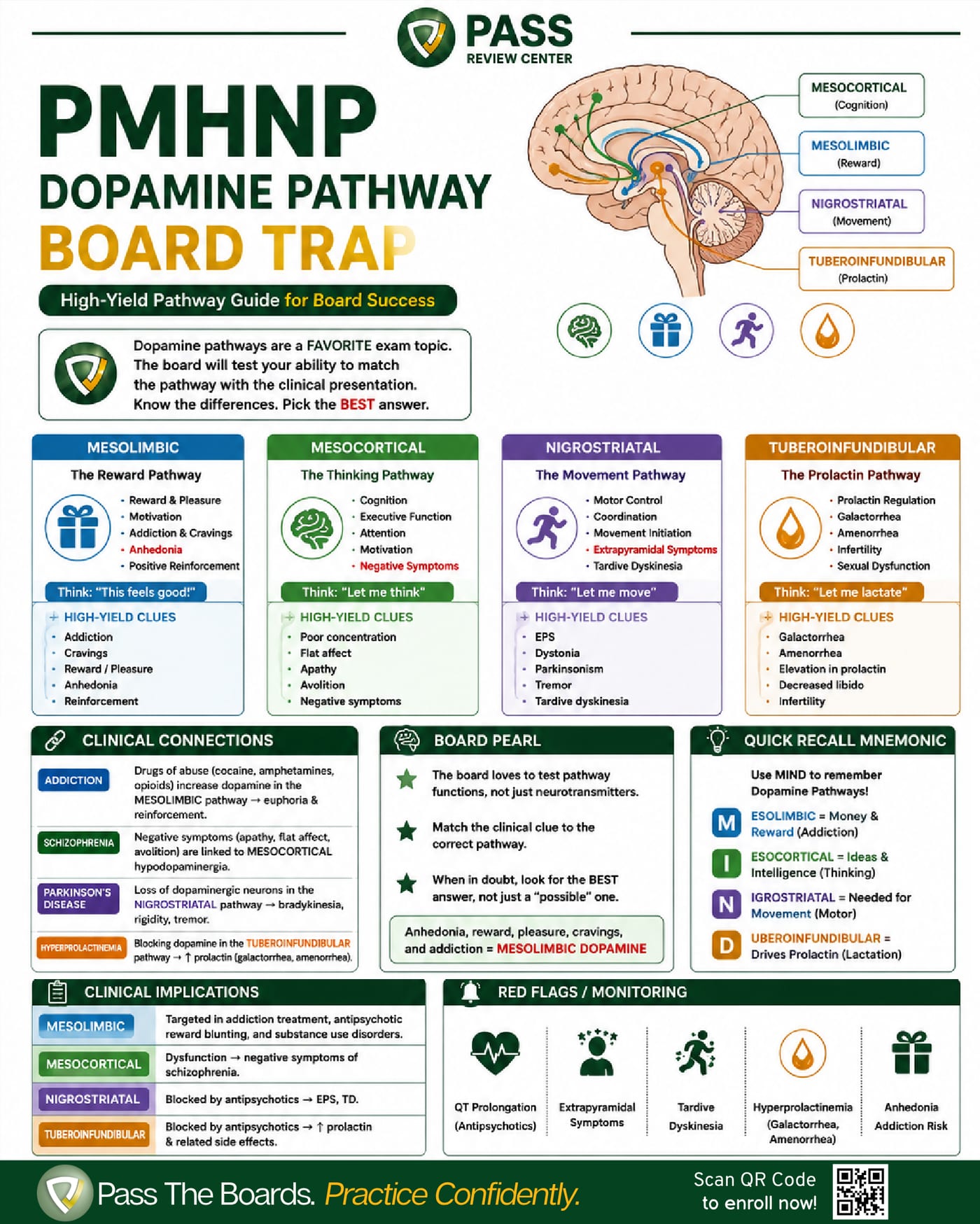
MOA: Strong dopamine D2 blockade. High-potency (haloperidol, fluphenazine) cause more extrapyramidal symptoms (EPS); low-potency (chlorpromazine) cause more sedation and anticholinergic effects.
Key adverse effects: EPS (acute dystonia, akathisia, parkinsonism, tardive dyskinesia), hyperprolactinemia, and neuroleptic malignant syndrome (NMS).
Atypical (Second-Generation)
MOA: D2 plus serotonin (5-HT2A) blockade, which lowers EPS risk but raises metabolic risk.
Key adverse effects: Weight gain, hyperglycemia/diabetes, dyslipidemia (worst with olanzapine and clozapine). Clozapine uniquely causes agranulocytosis (mandatory ANC monitoring via REMS) plus myocarditis and seizures.
Pearls: Atypicals require metabolic monitoring — weight/BMI, waist, fasting glucose, lipids, and BP. Use the AIMS exam for tardive dyskinesia. Deep dive: antipsychotic side effects.
Mood Stabilizers
Lithium: First-line for bipolar I and gold standard for anti-suicide benefit. Narrow therapeutic index (0.6–1.2 mEq/L). Monitor renal and thyroid function; watch NSAIDs, ACE inhibitors, thiazides, and dehydration. See lithium monitoring.
Valproate: Broad-spectrum; hepatotoxicity, pancreatitis, thrombocytopenia, and teratogenicity (neural tube defects — avoid in pregnancy). Monitor LFTs, CBC, and levels.
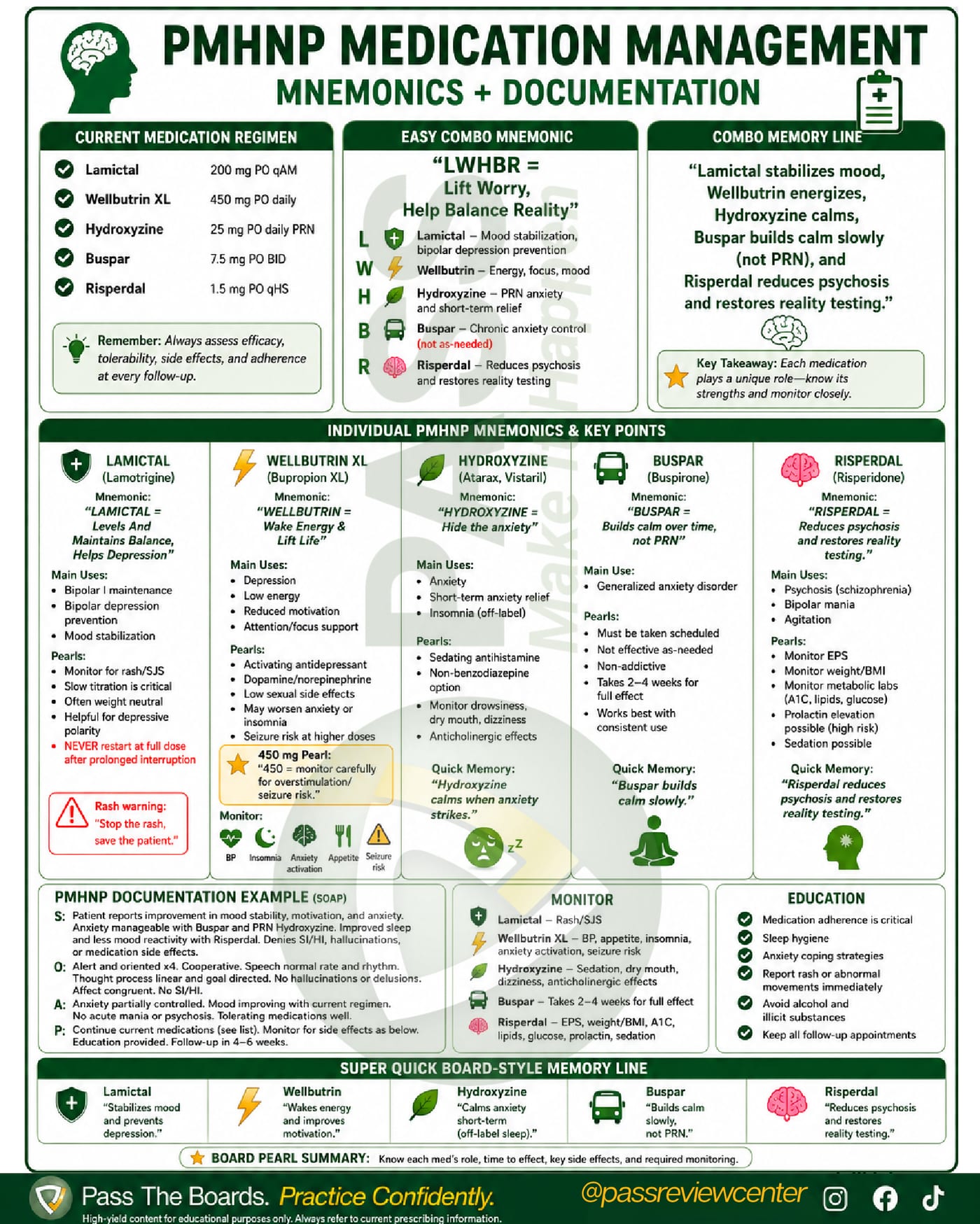
Lamotrigine: Best for bipolar depression; the board danger is Stevens-Johnson syndrome — titrate slowly and educate on rash.
Carbamazepine: Risk of agranulocytosis, SIADH, and SJS (test HLA-B*1502 in Asian ancestry); a potent CYP450 autoinducer.
Anxiolytics and Benzodiazepines
MOA: Benzodiazepines enhance GABA-A activity. Fast relief of acute anxiety, agitation, and alcohol withdrawal.
Key adverse effects: Sedation, dependence, tolerance, withdrawal (seizures), and respiratory depression — especially with opioids (combined black box warning).
Pearls: Lorazepam, oxazepam, and temazepam ("LOT") are safest in liver disease (no oxidative metabolism). Buspirone is a non-addictive 5-HT1A partial agonist for chronic GAD. More in benzodiazepines for the exam.
Stimulants and ADHD Medications
MOA: Methylphenidate and amphetamines increase dopamine and norepinephrine. First-line for ADHD.
Key adverse effects: Decreased appetite, insomnia, weight loss, increased HR/BP; abuse potential (Schedule II). Monitor growth, cardiovascular status, and screen cardiac history.
Pearls: Non-stimulants — atomoxetine (a selective norepinephrine reuptake inhibitor [NRI], carries a suicidality black box), guanfacine, and clonidine — are options when stimulants are unsafe. See ADHD medications.
Medications for Addiction Treatment (MAT)
Opioid use disorder:
- Methadone: Full mu-opioid agonist; QT prolongation risk; clinic-dispensed.
- Buprenorphine: Partial agonist (ceiling effect); often combined with naloxone (Suboxone) to deter misuse; precipitated withdrawal if given too early.
- Naltrexone: Opioid antagonist; requires full detox first.
Alcohol use disorder: Naltrexone, acamprosate, and disulfiram (aversive — causes a violent reaction with alcohol). Details in MAT for substance use.
High-Yield Cross-Cutting Topics
Serotonin syndrome vs. NMS: A guaranteed exam contrast. Serotonin syndrome has rapid onset, clonus, and hyperreflexia; NMS has slow onset, lead-pipe rigidity, and hyporeflexia. Master it in serotonin syndrome vs. NMS.
Black box warnings: Antidepressant suicidality (pediatric), clozapine agranulocytosis, benzodiazepine–opioid respiratory depression, and more in psych medication black box warnings.
Put It Into Practice
Reading a cheat sheet builds recognition; answering questions builds the recall you need on test day. The fastest way to lock in psychopharmacology is repetition with clinician-verified items and rationales. Drill the free PMHNP question bank, then create your free account to track your weak classes and turn this cheat sheet into a passing score.
Frequently asked questions
What is the most high-yield psychopharmacology topic for the PMHNP boards?
SSRIs and their adverse effects are the single most tested topic, followed closely by lithium monitoring, antipsychotic side effects (EPS and metabolic syndrome), and the serotonin syndrome vs. NMS contrast. Master those four areas first.
How should I memorize antidepressant side effects for the exam?
Group them by class quirk: SSRIs (hyponatremia, bleeding, sexual dysfunction, discontinuation syndrome), TCAs (anticholinergic effects and lethal overdose), MAOIs (tyramine hypertensive crisis), bupropion (lowers seizure threshold), and mirtazapine (sedation and weight gain).
Which mood stabilizer is associated with Stevens-Johnson syndrome?
Lamotrigine carries the highest-profile risk of Stevens-Johnson syndrome, which is why it must be titrated slowly. Carbamazepine also carries SJS risk, especially in patients of Asian ancestry who carry the HLA-B*1502 allele.
What labs do atypical antipsychotics require?
Metabolic monitoring: baseline and periodic weight/BMI, waist circumference, fasting glucose or A1c, fasting lipids, and blood pressure. Clozapine additionally requires absolute neutrophil count monitoring through the REMS program because of agranulocytosis risk.
Is this cheat sheet enough to pass the PMHNP boards?
It is a strong high-level map, but passing requires applying the concepts to clinical vignettes. Use it alongside deep-dive review and a clinician-verified question bank so you can practice selecting the right drug, recognizing toxicity, and choosing monitoring labs under exam conditions.
Related articles
Both PMHNP board blueprints broken down by domain and question count, plus the daily study system and high-yield content matrix that turn those weights into a study plan.
Since 2024, psychiatric NPs can certify through two boards: the long-standing ANCC PMHNP-BC or the newer AANPCB PMHNP-C. Here's how the two exams compare and how to choose.
PMHNP board review of perinatal mood disorders: baby blues vs postpartum depression vs psychosis, EPDS screening, SSRIs in pregnancy, and brexanolone.
Ready to practice what you just read?
Practice questions with full rationales. Sample your specialty free.
No credit card required · No subscription, no auto-renew