
Antipsychotic Side Effects: EPS, Tardive Dyskinesia & Metabolic Monitoring
Antipsychotic side effects for the PMHNP exam: EPS types, tardive dyskinesia, metabolic monitoring, prolactin, clozapine agranulocytosis, and the AIMS exam.
Antipsychotic side effects split along a predictable line: typical (first-generation) antipsychotics cause more extrapyramidal symptoms (EPS) from dopamine blockade, while atypical (second-generation) antipsychotics cause more metabolic side effects. Knowing the four EPS types, how to treat each, the metabolic monitoring schedule, prolactin effects, and clozapine's agranulocytosis risk will carry you through almost every antipsychotic question on the PMHNP-BC exam.
This review organizes the side effects so you can match the finding to the cause and the intervention. Clinical management requires current references — this is exam-focused study.
Typical vs. Atypical: The Core Trade-Off
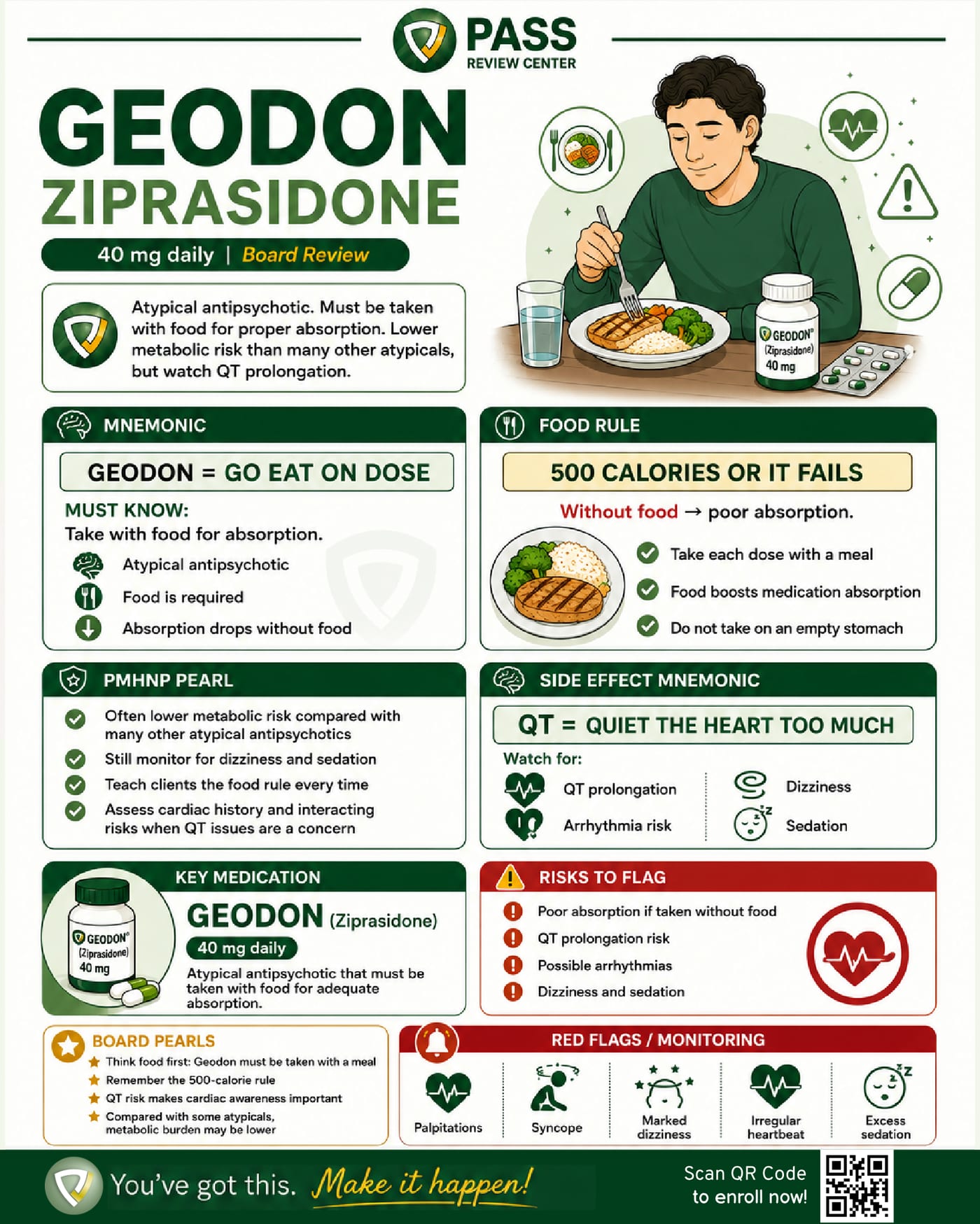
- Typical (first-generation): Strong D2 dopamine blockade. High-potency agents (haloperidol, fluphenazine) cause more EPS and hyperprolactinemia; low-potency agents (chlorpromazine) cause more sedation and anticholinergic effects.
- Atypical (second-generation): Block D2 plus serotonin (5-HT2A), which lowers EPS risk but raises metabolic risk (weight gain, diabetes, dyslipidemia).
Pearl: When the vignette describes movement problems, think typical/high-potency. When it describes weight gain, high glucose, or high lipids, think atypical.
Extrapyramidal Symptoms (EPS)
EPS come from dopamine blockade in the nigrostriatal pathway. Learn them by time of onset — a classic exam organizer.
1. Acute Dystonia (hours to days)
Sudden, sustained muscle contractions — torticollis, oculogyric crisis (eyes rolled up), laryngospasm (a medical emergency). Most common in young men early in treatment.
Treatment: Anticholinergics — benztropine or diphenhydramine (IM/IV), fast-acting.
2. Akathisia (days to weeks)
Inner restlessness and an inability to sit still — pacing, fidgeting. Often mistaken for worsening psychosis or anxiety (a key board trap).
Treatment: Beta-blockers (propranolol), sometimes benzodiazepines; lower the dose.
3. Parkinsonism (weeks)
Bradykinesia, rigidity, resting tremor, masked facies, shuffling gait — drug-induced Parkinson's.
Treatment: Anticholinergics (benztropine), amantadine, or reduce the dose.
4. Tardive Dyskinesia (TD) (months to years)
Late-onset, often irreversible involuntary movements — lip smacking, tongue protrusion, chewing, facial grimacing, choreoathetoid movements. Risk rises with duration of exposure, older age, and high-potency typicals.
Treatment: Stop or switch the antipsychotic (often to an atypical like clozapine or quetiapine); VMAT2 inhibitors — valbenazine or deutetrabenazine. Anticholinergics do not help and can worsen TD — a high-yield distinction.
Mnemonic for EPS onset (hours to years): "4 hours, 4 days, 4 weeks, 4 months" — dystonia, akathisia, parkinsonism, tardive dyskinesia.
The AIMS Exam
The Abnormal Involuntary Movement Scale (AIMS) screens for tardive dyskinesia. Baseline before starting an antipsychotic, then every 6 months (some recommend every 12 months for lower-risk patients). Early detection allows a medication change before TD becomes permanent.
Metabolic Syndrome and Monitoring (Atypicals)
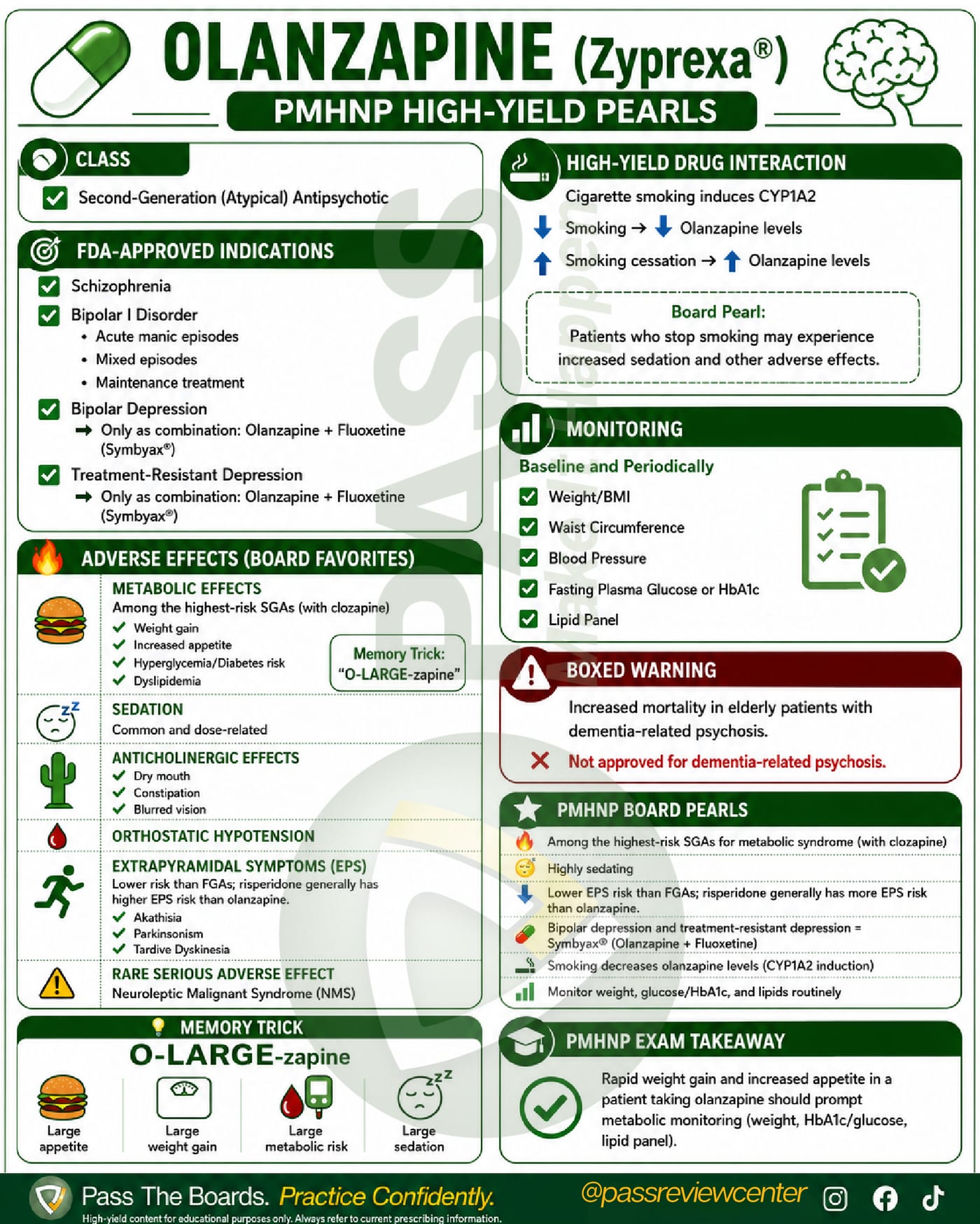
Atypicals — worst with olanzapine and clozapine, lowest with aripiprazole, ziprasidone, and lurasidone — cause:
- Weight gain
- Hyperglycemia / new-onset type 2 diabetes
- Dyslipidemia
This cluster is metabolic syndrome, a major long-term risk. Monitor:
- Weight/BMI: baseline, then monthly for 3 months, then quarterly.
- Waist circumference: baseline and annually.
- Fasting glucose (or A1c): baseline, 12 weeks, then annually.
- Fasting lipids: baseline, 12 weeks, then annually (or every 5 years if normal).
- Blood pressure: baseline, 12 weeks, then annually.
Hyperprolactinemia
Dopamine normally suppresses prolactin, so D2 blockade raises prolactin. Worst with risperidone and high-potency typicals. Symptoms:
- Women: galactorrhea, amenorrhea, irregular menses
- Men: gynecomastia, erectile dysfunction, decreased libido
- Both: decreased bone density over time
Pearl: Aripiprazole is a partial dopamine agonist and is prolactin-sparing — a good switch for prolactin problems.
Clozapine: The High-Risk Agent
Clozapine is uniquely effective for treatment-resistant schizophrenia and reduces suicidality, but it carries serious, testable risks:
- Agranulocytosis — potentially fatal drop in neutrophils. Mandatory ANC monitoring through a REMS program (weekly initially, then less often). Hold for low ANC.
- Myocarditis — monitor for chest pain, fever, tachycardia early in treatment.
- Seizures — dose-dependent.
- Severe constipation / ileus, sedation, hypersalivation, and significant metabolic effects.
Neuroleptic Malignant Syndrome (NMS)
Any antipsychotic can trigger NMS — fever, lead-pipe rigidity, autonomic instability, altered mental status, and elevated CK. It is slow in onset and life-threatening. Contrast it with serotonin syndrome in serotonin syndrome vs. NMS.
How This Fits the Bigger Picture
Antipsychotics are a major section of the psychopharmacology high-yield cheat sheet, and clozapine's agranulocytosis is a marquee entry in psych medication black box warnings. Mastering the EPS-vs-metabolic trade-off ties the whole class together.
Practice Until You Can't Miss
Antipsychotic questions reward fast matching: dystonia to benztropine, akathisia to propranolol, TD to a VMAT2 inhibitor, atypicals to metabolic labs, clozapine to ANC. The way to make those links automatic is repetition with clinician-verified questions and rationales. Drill the free PMHNP question bank or create a free account to track your antipsychotic accuracy and walk in ready.
Frequently asked questions
What are the four types of extrapyramidal symptoms?
Acute dystonia (hours to days), akathisia (days to weeks), drug-induced parkinsonism (weeks), and tardive dyskinesia (months to years). A helpful mnemonic for onset is 4 hours, 4 days, 4 weeks, 4 months. They result from dopamine blockade and are more common with typical antipsychotics.
How is acute dystonia treated versus akathisia?
Acute dystonia is treated with fast-acting anticholinergics like IM or IV benztropine or diphenhydramine. Akathisia is treated with beta-blockers such as propranolol, sometimes benzodiazepines, and a dose reduction. Anticholinergics do not help akathisia.
Why don't anticholinergics treat tardive dyskinesia?
Tardive dyskinesia is thought to involve dopamine receptor supersensitivity, not the cholinergic imbalance behind other EPS. Anticholinergics can actually worsen TD. Treatment is to stop or switch the antipsychotic and use a VMAT2 inhibitor like valbenazine or deutetrabenazine.
What metabolic monitoring do atypical antipsychotics require?
Baseline and periodic weight/BMI, waist circumference, fasting glucose or A1c, fasting lipids, and blood pressure. Weight is checked frequently in the first three months, with glucose and lipids rechecked at 12 weeks and then annually because of metabolic syndrome risk.
What is the AIMS exam and how often is it done?
The Abnormal Involuntary Movement Scale screens for tardive dyskinesia. It is performed at baseline before starting an antipsychotic and then about every 6 months, allowing early detection so the medication can be changed before the movements become permanent.
Why does clozapine require special monitoring?
Clozapine can cause agranulocytosis, a dangerous drop in neutrophils, so absolute neutrophil count must be monitored through a REMS program, frequently at first. It also carries risks of myocarditis, seizures, and severe constipation, despite being highly effective for treatment-resistant schizophrenia.
Related articles
Both PMHNP board blueprints broken down by domain and question count, plus the daily study system and high-yield content matrix that turn those weights into a study plan.
Since 2024, psychiatric NPs can certify through two boards: the long-standing ANCC PMHNP-BC or the newer AANPCB PMHNP-C. Here's how the two exams compare and how to choose.
PMHNP board review of perinatal mood disorders: baby blues vs postpartum depression vs psychosis, EPDS screening, SSRIs in pregnancy, and brexanolone.
Ready to practice what you just read?
Practice questions with full rationales. Sample your specialty free.
No credit card required · No subscription, no auto-renew