
Lithium Toxicity & Monitoring: The PMHNP Board Questions You'll See
Lithium monitoring for the PMHNP exam: therapeutic range, signs of toxicity, baseline and ongoing labs, dangerous drug interactions, and patient education.
Lithium has a narrow therapeutic index — the maintenance range is 0.6–1.2 mEq/L, and toxicity begins above ~1.5 mEq/L. That tiny window is exactly why lithium is a board favorite: you must know the range, recognize toxicity, order the right monitoring labs, and anticipate the interactions (NSAIDs, ACE inhibitors, thiazides, dehydration) that push levels into the danger zone.
This review walks through every lithium question type you'll see. Remember, actual dosing and toxicity management require current references and lab confirmation — this is exam-focused education.
Why Lithium Matters
Lithium is first-line for bipolar I disorder and is the gold standard for acute mania and maintenance. It is also the only mood stabilizer with strong evidence for reducing suicide risk — a high-yield exam point. Its downside is the narrow therapeutic index and the renal/thyroid monitoring burden.
The Therapeutic Range
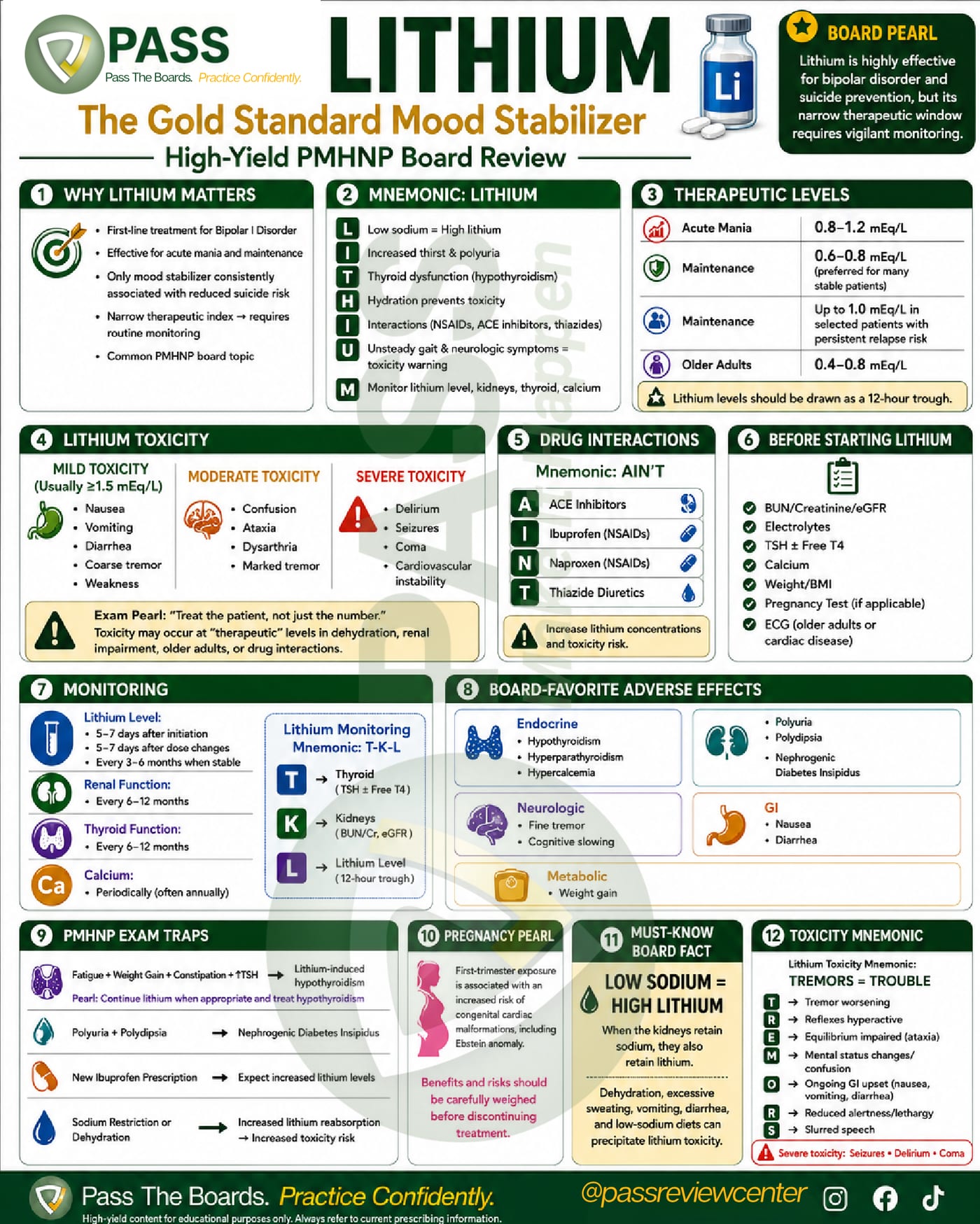
Draw as a trough — 12 hours after the last dose. Narrow therapeutic index.
- Maintenance: 0.6–1.2 mEq/L
- Acute mania: may target the upper end, ~1.0–1.2 mEq/L
- Toxicity: generally > 1.5 mEq/L; severe/life-threatening > 2.0 mEq/L
Pearl: Draw lithium levels as a trough — 12 hours after the last dose. This timing detail shows up on the exam.
Signs of Lithium Toxicity
Toxicity escalates with the level. Know the progression:
Early / mild (1.5–2.0 mEq/L):
- GI: nausea, vomiting, diarrhea
- Neuro: coarse tremor (a fine tremor can be a benign side effect; a coarse tremor signals toxicity), lethargy, muscle weakness, slurred speech
Moderate (2.0–2.5 mEq/L):
- Worsening confusion, ataxia, blurred vision, increasing tremor, myoclonic twitching, hyperreflexia
Severe (> 2.5 mEq/L):
- Seizures, arrhythmias, hypotension, renal failure, coma, death
Board pearl: Nausea, vomiting, diarrhea, and a coarse tremor in a bipolar patient = suspect lithium toxicity. Hold the dose and check a level.
Triggers That Cause Toxicity
Lithium is cleared by the kidneys and behaves like sodium, so anything that lowers sodium or reduces clearance raises lithium levels:
- Dehydration (fluid loss, vomiting, diarrhea, heat/sweating, fever)
- Low sodium intake or sodium loss
- NSAIDs (decrease renal clearance — raise lithium)
- ACE inhibitors and ARBs (raise lithium)
- Thiazide diuretics (raise lithium; loop diuretics less so)
- New-onset renal impairment
Pearl: Counsel patients to maintain consistent salt and fluid intake and to avoid OTC NSAIDs (use acetaminophen instead). A patient who starts a thiazide or an NSAID, or who gets a GI bug, is a classic toxicity vignette.
Monitoring: Baseline Labs
Before starting lithium, obtain:
- Renal function: BUN, creatinine (and eGFR) — lithium is renally cleared and nephrotoxic long-term.
- Thyroid function: TSH — lithium can cause hypothyroidism.
- Electrolytes, especially sodium and calcium (can cause hypercalcemia).
- Pregnancy test — lithium is teratogenic (Ebstein anomaly, a cardiac defect).
- ECG in patients with cardiac risk factors.
- CBC (lithium can cause benign leukocytosis).
Monitoring: Ongoing Labs
- Lithium level: every few days when initiating or after dose changes; then every 6–12 months when stable (and whenever toxicity is suspected or a new interacting drug starts).
- Renal function (BUN/Cr): every 6–12 months.
- Thyroid (TSH): every 6–12 months (watch for hypothyroidism — fatigue, weight gain, cold intolerance).
Mnemonic: Lithium hits the kidneys and thyroid — monitor both for life.
Long-Term Adverse Effects
- Hypothyroidism / goiter — treat with levothyroxine; don't necessarily stop lithium.
- Nephrogenic diabetes insipidus — polyuria, polydipsia (ADH resistance at the kidney).
- Chronic kidney disease with long-term use.
- Fine tremor, weight gain, acne, hypercalcemia.
- Teratogenicity — Ebstein anomaly; weigh risks in pregnancy.
Patient Education Pearls
- Stay hydrated and keep salt intake consistent — big swings change your lithium level.
- Avoid NSAIDs (ibuprofen, naproxen); use acetaminophen and ask before any new medication.
- Report toxicity signs: worsening tremor, vomiting, diarrhea, confusion, unsteadiness.
- Don't skip lab appointments — levels and kidney/thyroid checks keep you safe.
- Tell every provider you take lithium, especially before starting blood pressure or water pills.
- Use reliable contraception and discuss any pregnancy plans.
How Lithium Fits the Bigger Picture
Lithium is the cornerstone of the mood-stabilizer section in the psychopharmacology high-yield cheat sheet, where it sits alongside valproate, lamotrigine, and carbamazepine. Its teratogenicity and narrow index also feature in psych medication black box warnings.
Practice Until It's Second Nature
Lithium questions reward fast recognition of the range, the trough timing, the toxicity triad, and the interaction that tipped a patient over. The way to lock it in is repetition with clinician-verified questions and rationales. Drill the free PMHNP question bank or register for a free account to track your accuracy on mood-stabilizer items and never lose an easy lithium point.
Frequently asked questions
What is the therapeutic range for lithium?
The maintenance range is 0.6 to 1.2 mEq/L, with acute mania sometimes targeting the upper end. Toxicity generally begins above 1.5 mEq/L and becomes severe above 2.0 to 2.5 mEq/L. Lithium levels should be drawn as a trough, 12 hours after the last dose.
What are the early signs of lithium toxicity?
Early toxicity presents with GI symptoms (nausea, vomiting, diarrhea) and neurologic signs including a coarse tremor, lethargy, muscle weakness, and slurred speech. A coarse tremor is a key warning sign, in contrast to the benign fine tremor seen at therapeutic levels.
Which drugs increase lithium levels?
NSAIDs, ACE inhibitors, ARBs, and thiazide diuretics all reduce lithium clearance and raise levels. Dehydration and low sodium intake do the same. Patients should avoid NSAIDs, use acetaminophen instead, and keep fluid and salt intake consistent.
What baseline labs are required before starting lithium?
Renal function (BUN, creatinine, eGFR), thyroid function (TSH), electrolytes including sodium and calcium, a pregnancy test (lithium causes Ebstein anomaly), and an ECG if cardiac risk factors are present. Renal and thyroid function are then monitored every 6 to 12 months.
What long-term problems can lithium cause?
Hypothyroidism, nephrogenic diabetes insipidus (polyuria and polydipsia), chronic kidney disease, hypercalcemia, fine tremor, weight gain, and acne. This is why ongoing renal and thyroid monitoring is essential throughout treatment.
Related articles
Both PMHNP board blueprints broken down by domain and question count, plus the daily study system and high-yield content matrix that turn those weights into a study plan.
Since 2024, psychiatric NPs can certify through two boards: the long-standing ANCC PMHNP-BC or the newer AANPCB PMHNP-C. Here's how the two exams compare and how to choose.
PMHNP board review of perinatal mood disorders: baby blues vs postpartum depression vs psychosis, EPDS screening, SSRIs in pregnancy, and brexanolone.
Ready to practice what you just read?
Practice questions with full rationales. Sample your specialty free.
No credit card required · No subscription, no auto-renew